

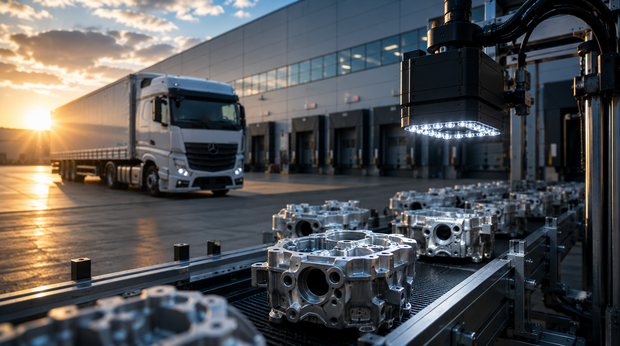
ORIMP - AI-Powered Quality Control in Logistics and Automotive Supply Chains
Simon-Trans Ltd. is a Hungarian logistics company specializing in supply chain optimization, transportation, warehousing, and value-added logistics services. Since 2001, the company has continuously invested in innovative technologies to improve operational performance and help its partners remain competitive in demanding industries such as automotive and pharmaceuticals.
As part of the ORIMP experiment within AIRISE, Simon-Trans Ltd. aimed to improve its pre-production quality control process for automotive components. By implementing AI-powered image recognition technology, the company sought to automate defect detection, reduce manual inspection efforts, and improve both operational efficiency and sustainability.
Sustainable Logistics Operations
AI-driven Automated Quality Inspection
Simon-Trans Ltd. faced recurring quality control issues related to rust formation on cast iron automotive components during overseas transportation. Poor packaging materials and shipping conditions could compromise part quality, requiring inspection and sorting before the components entered production.
The existing quality control process relied on manual visual inspections, which were time-consuming, labor-intensive, and prone to human error. Defective parts entering production could lead to operational delays, additional costs, increased material waste, and unnecessary transportation activities.
The company needed a more efficient and reliable solution capable of improving inspection accuracy while supporting sustainability objectives and maintaining customer satisfaction.
Within the AIRISE ORIMP experiment, an AI-based quality inspection solution was implemented using image recognition technology and high-resolution cameras.
Historical and newly collected inspection images were annotated and used to train an AI classification model capable of identifying rust defects on cast iron components. The system automatically evaluates each part before production and classifies it according to predefined quality criteria, determining whether it should proceed to production or be sent for rework.
During implementation, challenges related to dataset size, image annotation consistency, and model training were addressed through close collaboration between Simon-Trans Ltd. and the AIRISE technical partners. Additional sample data were collected, labels were refined, and the AI model was continuously improved to increase detection accuracy.
The resulting solution automates quality control activities, supports operator decision-making, and creates digital inspection records that improve traceability and compliance with industry standards.
- Improved Quality Inspection Accuracy and Efficiency:
- AI-powered image recognition significantly increased the speed and consistency of rust detection compared with manual inspections.
- Automated quality control reduced human errors and improved sorting accuracy throughout the inspection process.
- The implemented AI model achieved approximately 90% accuracy during testing.
- Reduced Waste and Resource Consumption:
- Defective components can now be identified and reworked before entering production, reducing raw material waste.
- Production interruptions caused by defective parts have been minimized, improving production efficiency and reducing unnecessary energy consumption.
- The need to return defective products to suppliers has been reduced, lowering transportation-related fuel consumption and associated emissions.
- Enhanced Customer Confidence:
- Digital inspection records improved traceability and compliance with automotive industry quality requirements.
- The improved inspection process received positive feedback from international partners, strengthening business relationships and increasing customer satisfaction.
- The solution helped reinforce Simon-Trans Ltd. reputation as a reliable and innovative logistics partner.
Following the success of the AIRISE experiment, Simon-Trans Ltd. plans to expand the use of AI beyond automated defect detection.
Future developments include the application of AI for predictive maintenance, reporting and business intelligence analysis, and the identification of additional quality defects such as structural damage. The company is also considering participation in larger-scale AIRISE pilot activities to further accelerate the integration of AI into its operations.
These developments will contribute to Simon-Trans Ltd. long-term goals of improving operational efficiency, reducing environmental impact, and strengthening its digital transformation strategy. The company now views AI as a key enabler of more sustainable, reliable, transparent, and scalable logistics and quality control processes.